OPTIMUM EXERCISE PHYSIOLOGY

  • Home
  • Services
    • Exercise Physiology >
      • NDIS
      • Home/Aged Care Package
      • Chronic Disease Rehabilitation
      • Musculoskeletal Rehabilitation
      • Allied Health Solutions
      • Diabetes >
        • Diabetes Exercise Class
      • Athletic Development
      • DVA
      • Workplace Injury
      • Medicare Referrals
      • Telehealth
      • Personal Training
    • Group Classes >
      • EP Group
      • Diabetes Exercise Class
      • Strength Bones & Balance
      • Timetable
    • Diabetes Education >
      • Optimum Diabetes
    • Conditions We Treat >
      • Diabetes
      • Cardiovascular Disease
      • Exercise & Cancer
      • Osteoporosis & Bone Health
      • Chronic Pain
      • Osteoarthritis
      • Stroke
      • Weight Loss
      • Pre & Post Natal Exercise
      • Neurological Conditions
      • Mental Health
      • Joint & Muscle Pain
      • Pulmonary Conditions
  • Referrals
  • Resources
    • Blog
    • Client Resources
  • About
    • Our Team
    • Exercise Physiology
    • FAQ
    • Contact Us
  • Book Now
  • Home
  • Services
    • Exercise Physiology >
      • NDIS
      • Home/Aged Care Package
      • Chronic Disease Rehabilitation
      • Musculoskeletal Rehabilitation
      • Allied Health Solutions
      • Diabetes >
        • Diabetes Exercise Class
      • Athletic Development
      • DVA
      • Workplace Injury
      • Medicare Referrals
      • Telehealth
      • Personal Training
    • Group Classes >
      • EP Group
      • Diabetes Exercise Class
      • Strength Bones & Balance
      • Timetable
    • Diabetes Education >
      • Optimum Diabetes
    • Conditions We Treat >
      • Diabetes
      • Cardiovascular Disease
      • Exercise & Cancer
      • Osteoporosis & Bone Health
      • Chronic Pain
      • Osteoarthritis
      • Stroke
      • Weight Loss
      • Pre & Post Natal Exercise
      • Neurological Conditions
      • Mental Health
      • Joint & Muscle Pain
      • Pulmonary Conditions
  • Referrals
  • Resources
    • Blog
    • Client Resources
  • About
    • Our Team
    • Exercise Physiology
    • FAQ
    • Contact Us
  • Book Now

Blog

Bodyweight exercises at home - progressions

4/2/2021

1 Comment

 
Bodyweight exercises are a great way to stay in shape at home. They’re effective, they do not require any special equipment and you can do them anywhere, making them a perfect solution for people without equipment or when you are on holidays.

Below are 3 body weight exercises that you can do at home with a couple of variations of each exercise for different fitness levels.  
This is general advice and these exercises may not be suitable for everyone, so please pick and choose which exercise and which version might be best for you, or consult an exercise physiologist for individualised exercise prescription.

Squat
Most of us know how to perform a squat and there are lots of variations depending upon your ability.
​
Picture
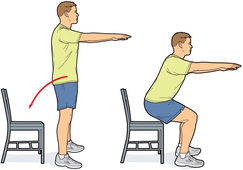
​Level 1 of the squat is the chair stand.  
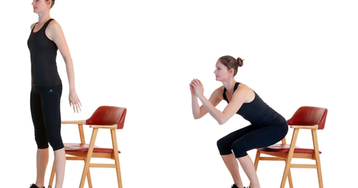
  • Simply start by sitting in a chair, feet hip width apart, cross your arms across your chest, or out in front as shown and then stand up.  
  • Try and keep your head mostly above your bottom when you are standing up, and push into your heels as you stand up.  
  • Once you are standing, reverse the action slowly, without plonking down.
  • Repeat this.
Picture
Next level is to undertake a squat tap.  
  • Very similar to the chair stand, except rather than sitting down fully onto the chair. In between each repetition we just tap our bottom to the chair and then stand up straight again.
  • We again want to keep out head mostly over our bottom so that we don’t lean forward too much.

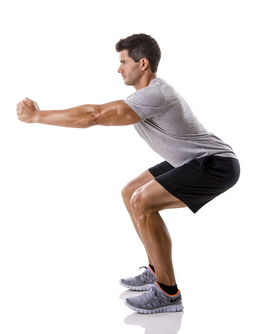
Once you have mastered this, you can progress to the full squat.  
​
Picture
  • There are a number of variations, but to begin with, start with your feet at hip width or slightly wider, turn your toes out about 30 degrees, then simply bend your knees, keeping them in line with your toes, and your bottom should go behind you. And then reverse to stand up fully again, but without locking your knees out.
  • You can increase the difficulty by holding weight at your chest or a barbell at the front of your chest or on your back.
Complete around 10-15 repetitions slowly, never bouncing into the movement and repeat this sequence 3 times.

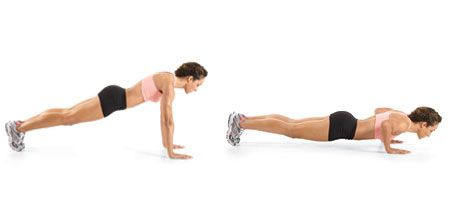
The second exercise is the push up, again beginner through to advanced versions.
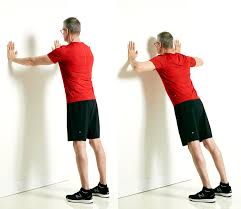
Beginner level is a wall push up
​
Picture
  • stand facing a wall, approximately 2 feet back from the wall.  
  • Then extend your hands out from your chest onto the wall.  
  • Now imagining that you have a broomstick stuck to the back of your head, back of your shoulders, back of your bottom and back of your heels, keep that straight line and bend your elbows so that your forehead goes towards the wall, once almost head butting the wall, gently push out back to starting position.  And repeat
Increase the challenge of a wall push up by progressing to the kitchen bench which is lower, so we are working against gravity more.

​
Picture
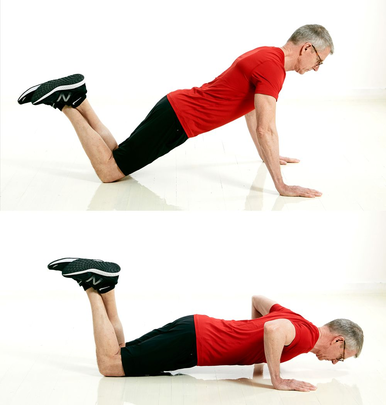
Those familiar with push ups might also undertake them on the floor with hands and knees in a box position, or in a full push up position on hands and toes.
​
Picture
Again undertake 3 sets of 10 repetitions slowly.

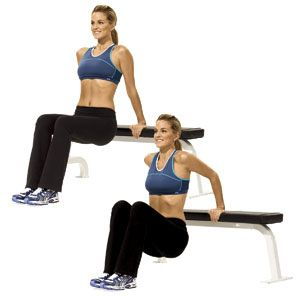
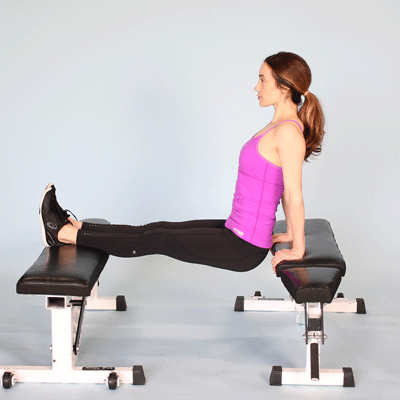
The final exercise is the tricep dip.  This one targets the tuck shop arms or the tricep muscle group at the back of the upper arm.
  • Commence by sitting with your bottom on the edge of a chair.
  • Now put your hands on the chair right next to your bottom with the heel of your hand on the top of the chair and your fingers wrapping around the edge and under the chair or bench.
  • Now walk your feet forward slightly so that you are no longer sitting on the chair and you are holding your bodyweight with your arms.
  • Now bend your elbows so that your bottom drops towards the floor until your elbows are at right angles.  Then reverse this movement by pushing up to straighten your arms again to the starting position.
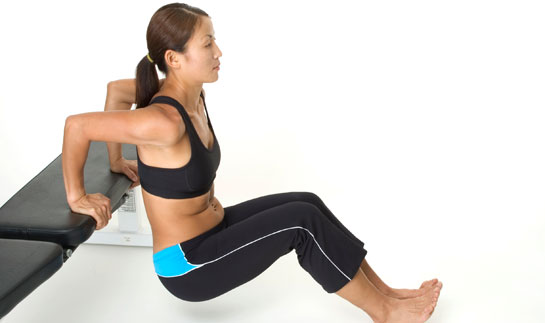
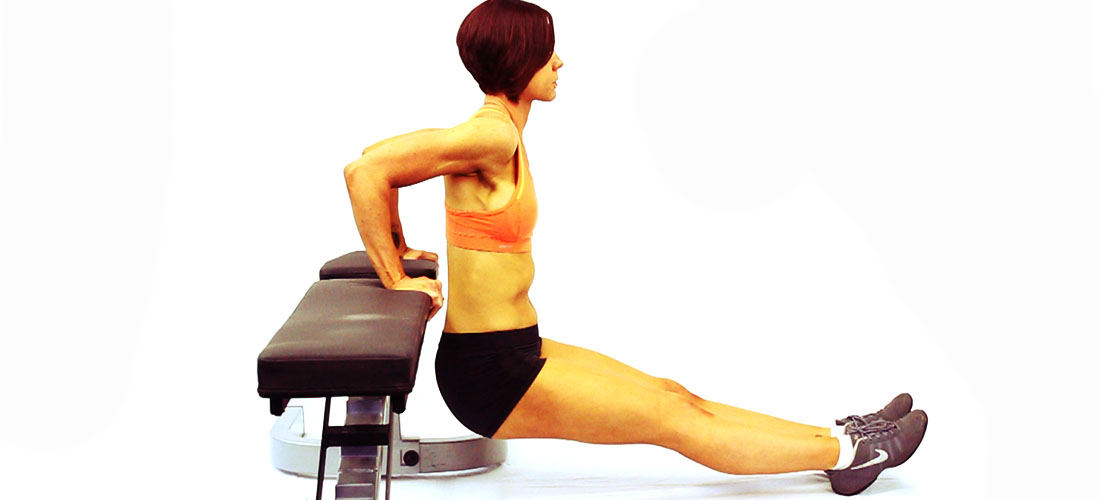
  • You can make this exercise more challenging by moving your feet further away from you, even as far as to having your legs straight.  More weight is then being put through your arms.
  • Again, complete 3 sets of 10-15 repetitions and feel the burn.

Beginner:

​
Picture
Intermediate:

​
Picture
​Advanced:
Picture
Picture
Lisa Parkinson
Accredited Exercise Physiologist & Credentialled Diabetes Educator.

1 Comment
WES TURNBULL
13/2/2021 01:11:34 pm

I stopped the Parkinson's medications prescribed due to severe side effects and started on natural treatments from VineHealth Center (VHC) in California, the herbal treatment has made a huge difference for me. My symptoms including tremors disappeared after the months long treatment! Go to ww w. vinehealthcenter. c om. This treatment is simply amazing!  

Reply

Your comment will be posted after it is approved.


Leave a Reply.

    AuthorS

    Lisa Parkinson
    ​Accredited Exercise Physiologist, Diabetes Educator

    Thomas Harrison
    Accredited Exercise Physiologist
    ​
    Rebecca Dostan
    Accredited Exercise Physiologist

    Archives

    November 2025
    July 2025
    April 2025
    January 2025
    December 2024
    November 2024
    October 2024
    September 2024
    August 2024
    July 2024
    June 2024
    May 2024
    March 2024
    January 2024
    November 2023
    October 2023
    July 2023
    May 2023
    December 2022
    November 2022
    September 2022
    August 2022
    July 2022
    June 2022
    May 2022
    April 2022
    March 2022
    February 2022
    January 2022
    December 2021
    November 2021
    October 2021
    September 2021
    August 2021
    July 2021
    June 2021
    May 2021
    April 2021
    March 2021
    February 2021
    January 2021
    December 2020
    November 2020
    October 2020
    September 2020
    August 2020
    July 2020
    June 2020
    May 2020
    April 2020
    March 2020
    July 2019
    July 2018
    December 2016
    September 2016

    Categories

    All
    Active Ageing
    Asthma
    Back Pain
    Cancer
    Cardiovascular
    Chronic Pain
    COVID-19
    Diabetes
    Disability
    Education
    Ergonomics
    Falls Prevention
    Foam Rolling
    General Health
    Goal Setting
    Heart Health
    High Cholesterol
    Hypertension
    Injury Prevention
    Insulin Resistance
    Liver Disease
    Low Back Pain
    Menopause
    Men's Health
    Mental Health
    Motivation
    Muscle Soreness
    Neurological Conditions
    Obesity
    Osteoarthritis
    Osteoporosis
    Pain
    Parkinson's Disease
    Pilates
    Pregnancy
    Rehabilitation
    Rheumatoid Arthritis
    Running
    Shoulder
    Sleep
    Strength Training
    Stress
    Stretching
    Type 2 Diabetes
    Walking
    Weight Loss

    RSS Feed

Copyright © Optimum Exercise Physiology, 2020. All Rights Reserved.