
OPTIMUM EXERCISE PHYSIOLOGY

  • Home
  • Services
    • Exercise Physiology >
      • NDIS
      • Run Assessment
      • Home/Aged Care Package
      • Chronic Disease Rehabilitation
      • Musculoskeletal Rehabilitation
      • Allied Health Solutions
      • Diabetes >
        • Diabetes Exercise Class
      • Athletic Development
      • DVA
      • Workplace Injury
      • Medicare Referrals
      • Telehealth
      • Personal Training
    • Group Classes >
      • EP Group
      • Diabetes Exercise Class
      • Strength Bones & Balance
      • Strong Teens
      • Timetable
    • Casual Gym
    • Diabetes Education >
      • Optimum Diabetes
    • Conditions We Treat >
      • Diabetes
      • Cardiovascular Disease
      • Exercise & Cancer
      • Osteoporosis & Bone Health
      • Chronic Pain
      • Osteoarthritis
      • Stroke
      • Weight Loss
      • Pre & Post Natal Exercise
      • Neurological Conditions
      • Mental Health
      • Joint & Muscle Pain
      • Pulmonary Conditions
  • Referrals
  • Resources
    • Blog
    • Client Resources
  • About
    • Our Team
    • Exercise Physiology
    • FAQ
    • Contact Us
  • Book Now
  • Home
  • Services
    • Exercise Physiology >
      • NDIS
      • Run Assessment
      • Home/Aged Care Package
      • Chronic Disease Rehabilitation
      • Musculoskeletal Rehabilitation
      • Allied Health Solutions
      • Diabetes >
        • Diabetes Exercise Class
      • Athletic Development
      • DVA
      • Workplace Injury
      • Medicare Referrals
      • Telehealth
      • Personal Training
    • Group Classes >
      • EP Group
      • Diabetes Exercise Class
      • Strength Bones & Balance
      • Strong Teens
      • Timetable
    • Casual Gym
    • Diabetes Education >
      • Optimum Diabetes
    • Conditions We Treat >
      • Diabetes
      • Cardiovascular Disease
      • Exercise & Cancer
      • Osteoporosis & Bone Health
      • Chronic Pain
      • Osteoarthritis
      • Stroke
      • Weight Loss
      • Pre & Post Natal Exercise
      • Neurological Conditions
      • Mental Health
      • Joint & Muscle Pain
      • Pulmonary Conditions
  • Referrals
  • Resources
    • Blog
    • Client Resources
  • About
    • Our Team
    • Exercise Physiology
    • FAQ
    • Contact Us
  • Book Now

Blog

What are sets? Are they different to a rep? All the exercise definitions you need to know.

26/8/2021

0 Comments

 
Picture


​


​
​Have you ever been in a gym or group class and all these words are being yelled out and you have no idea what they mean or what you are meant to be doing? We are here to help you understand what all those terms mean to help you feel more comfortable when exercising. 
​

Here is our guide to all the exercise terminology you need to know: 
  • Repetition (Rep): How many times an exercise or movement is prescribed to be completed. 
  • Set: Is the number of times you complete the desired number of repetitions in a row before having a break. Completing a number of sets with rest breaks in between is a common exercise method used in resistance or aerobic based training. For example, you may be asked to complete 3 sets of 10 reps of an exercise. 
  • Warm-up: Exactly as the name says this involves warming the body up before you begin the main portion of your exercise session. This is crucial for priming the body for movement and preventing injury.
  • Cool down: Involves cooling the body down and returning it to pre-exercise levels in regards to breathing and heart rate. This assists your body in stabilising and prevents post exercise stiffness and soreness. 
  • DOM’s (Delayed Onset Muscle Soreness): Is muscle pain that occurs after exercise when a muscle has been used excessively during strength or aerobic training and is recovering. Usually results in the muscle feeling tender for 24-48 hours. 
  • Cardio: Cardio is short for cardiovascular exercise which involves exercise that increases your heart rate for a continuous period of time longer than 10mins. This generally involves activities like walking, running, cycling, swimming, etc. 
  • Strength training: This is training that involves some form of resistance. This may be produced from body weight, free weights, machines or bands. It aims to improve either muscular strength, muscular power or muscular endurance. 
  • Stretching: Involves lengthening a muscle to improve its flexibility which in turn improves joint range of motion, decreases stiffness and improves overall movement/ function.

Picture
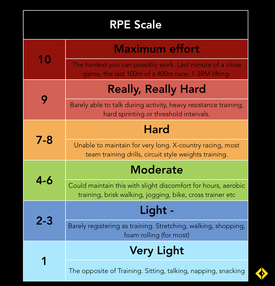
  • RPE (Rate of Perceived Exertion): Is a subjective measure used to determine what exercise intensity an individual is working at. It ranges from a score of 1 which equates to doing nothing, all the way up to 10 which is your absolute maximal effort. 
  • Heart Rate: The rate at which your heart is beating, this will increase with exercise. 


​
This is a beginner’s guide to exercise terminology, if there are more terms you would like to know the meaning of, please get in touch at [email protected] we are happy to help! 

By, Aleisha Michael
Accredited Exercise Physiologist. 


0 Comments

Your comment will be posted after it is approved.


Leave a Reply.

    Categories

    All
    Active Ageing
    Asthma
    Back Pain
    Cancer
    Cardiovascular
    Chronic Pain
    COVID-19
    Diabetes
    Disability
    Education
    Ergonomics
    Falls Prevention
    Foam Rolling
    General Health
    Goal Setting
    Heart Health
    High Cholesterol
    Hypertension
    Injury Prevention
    Insulin Resistance
    Kids
    Liver Disease
    Low Back Pain
    Menopause
    Men's Health
    Mental Health
    Motivation
    Muscle Soreness
    Neurological Conditions
    Obesity
    Osteoarthritis
    Osteoporosis
    Pain
    Parkinson's Disease
    Pilates
    Pregnancy
    Rehabilitation
    Rheumatoid Arthritis
    Running
    Shoulder
    Sleep
    Strength Training
    Stress
    Stretching
    Type 2 Diabetes
    Walking
    Weight Loss
    Youth

    RSS Feed

Copyright © Optimum Exercise Physiology, 2020. All Rights Reserved.